
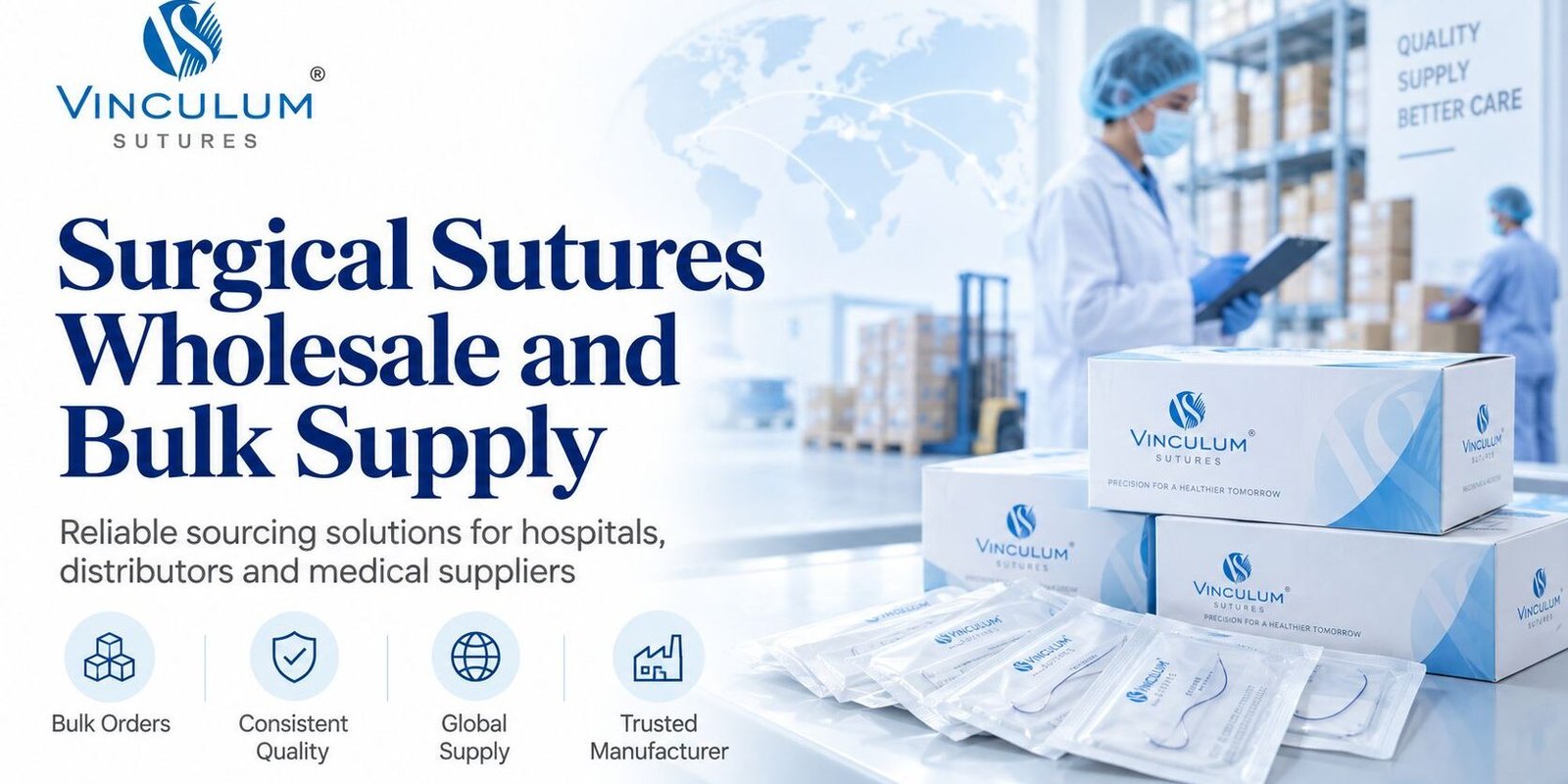
A Guide for Hospitals, Distributors and Importers
Surgical sutures are essential medical devices used across general surgery, orthopedics, gynecology, cardiovascular procedures, ophthalmology, dental surgery, and many other specialties. For hospitals, medical distributors, procurement companies, and international importers, having access to a reliable surgical sutures wholesale and bulk supply partner is important for maintaining uninterrupted inventory and consistent product quality.
Bulk procurement can also help healthcare organizations and distributors streamline sourcing, reduce repeated purchasing cycles, and maintain a wider range of suture materials and sizes. However, choosing the right surgical suture supplier requires careful evaluation of product range, manufacturing standards, packaging, documentation, and supply capabilities.
Understanding Surgical Sutures Wholesale and Bulk Supply
Wholesale surgical suture supply refers to purchasing sutures in larger quantities directly from manufacturers, exporters, or authorized suppliers. Bulk orders are commonly placed by hospitals, healthcare networks, surgical centers, medical distributors, government procurement agencies, and importers.
Unlike small retail purchases, wholesale procurement usually focuses on long-term supply requirements. Buyers may require multiple suture materials, needle combinations, sizes, packaging formats, and customized order quantities.
Working with an experienced surgical sutures manufacturer can help buyers consolidate their procurement and reduce the need to source different products from multiple suppliers.
Types of Surgical Sutures Available for Bulk Procurement
Hospitals and distributors generally require a combination of absorbable and non-absorbable surgical sutures.
Absorbable sutures are designed to gradually lose tensile strength and be absorbed by the body over time. Depending on the clinical requirement, they may be manufactured from synthetic or natural materials.
Common absorbable suture materials include polyglactin, polyglycolic acid, polydioxanone, catgut, and other synthetic polymers.
Non-absorbable sutures are designed to retain strength for longer periods and may be used where extended tissue support is required.
Common non-absorbable materials include polypropylene, nylon, polyester, and silk.
For bulk buyers, having access to multiple suture materials allows them to serve different surgical departments and medical specialties from a single supply source.
Why Hospitals Prefer Bulk Surgical Suture Procurement
Hospitals perform surgical procedures regularly and therefore require consistent availability of sutures in different specifications.
Bulk procurement helps hospitals plan inventory more efficiently and reduces the risk of stock shortages. Procurement teams can also standardize commonly used suture types and maintain adequate quantities for operating rooms, emergency departments, and specialty units.
Another important advantage is supply continuity. Establishing a relationship with a dependable manufacturer or wholesale supplier can make repeat ordering easier and help hospitals maintain predictable procurement cycles.
Hospitals should also evaluate product labeling, sterilization details, expiry information, packaging integrity, and documentation before finalizing a supplier.
Opportunities for Medical Distributors
Medical distributors play an important role between manufacturers and healthcare providers. Surgical sutures are a recurring-consumption product, making them a relevant category for distributors supplying hospitals, clinics, nursing homes, surgical centers, and pharmacies.
Distributors can build a broader product portfolio by stocking multiple suture materials, sizes, and needle configurations.
A strong surgical suture supplier can support distributors with consistent product availability, export-ready packaging, product documentation, and bulk order fulfillment.
Distributors looking to expand into new regions should also analyze local demand. For example, commonly used sutures in general surgery may differ from requirements in cardiovascular, ophthalmic, orthopedic, or gynecological procedures.
What International Importers Should Check
Importing surgical sutures requires more due diligence than domestic purchasing. International buyers should carefully evaluate the manufacturer’s ability to meet product, documentation, packaging, and regulatory requirements applicable to the destination market.
Importers should review the manufacturer’s product range, quality management systems, technical documentation, labeling options, sterilization information, and export experience.
It is also important to confirm whether the supplier can support the required order volume consistently. A supplier capable of fulfilling one shipment may not necessarily be suitable for long-term distribution.
International buyers should also discuss shipping terms, lead times, minimum order quantities, packaging configurations, and documentation requirements before placing large orders.
Importance of Product Range in Bulk Supply
One of the biggest advantages of working with a comprehensive surgical suture manufacturer is access to multiple products under one supplier.
Hospitals and distributors may require absorbable sutures, non-absorbable sutures, monofilament sutures, braided sutures, and different needle configurations.
A wider product portfolio simplifies procurement and allows buyers to consolidate orders. This can make inventory planning easier and reduce administrative work associated with managing multiple vendors.
For distributors, a broad product range also makes it easier to target multiple medical specialties and respond to different customer requirements.
Packaging and Labeling for Wholesale Orders
Packaging is an important consideration in surgical suture procurement.
Sutures must be securely packed to protect product integrity during transportation and storage. Clear labeling should provide necessary information such as product type, size, needle specification, batch details, sterilization status, manufacturing information, and expiry details, where applicable.
For international distribution, importers may also require market-specific labeling, branding, or packaging formats.
These requirements should be discussed with the supplier before confirming a large order.
Private Label and OEM Opportunities
Many distributors and medical supply companies prefer to sell surgical sutures under their own brand.
Private-label or OEM manufacturing can allow distributors to build brand recognition while working with an established manufacturer for production.
Depending on the manufacturer’s capabilities, private-label services may include customized branding, packaging, labeling, product selection, and bulk manufacturing.
Before starting an OEM project, buyers should clearly define their target market, required products, expected order volumes, packaging specifications, and applicable regulatory requirements.
Choosing the Right Surgical Sutures Wholesale Supplier
Selecting a supplier should not be based only on price.
Buyers should evaluate manufacturing capability, product consistency, quality systems, technical support, product range, communication, export experience, and ability to fulfill repeat orders.
Hospitals should prioritize reliable supply and product consistency, while distributors and importers should also consider scalability and long-term business support.
Requesting product information, documentation, samples where appropriate, and commercial terms can help buyers make a more informed sourcing decision.
Vinculum Sutures for Wholesale and Bulk Requirements
Vinculum Sutures offers a range of surgical sutures and related surgical products for healthcare organizations, distributors, and international buyers.
With absorbable and non-absorbable suture options available in different materials and configurations, Vinculum Sutures can support varied surgical procurement requirements.
Hospitals, medical distributors, and importers looking for surgical sutures wholesale and bulk supply can contact Vinculum Sutures to discuss product specifications, order quantities, packaging requirements, and export enquiries.
Choosing the right surgical suture supplier can help ensure consistent product availability, streamlined procurement, and long-term supply reliability for healthcare and distribution businesses.